
 Arabic
  English
  Turkish
  Russian
  Chinese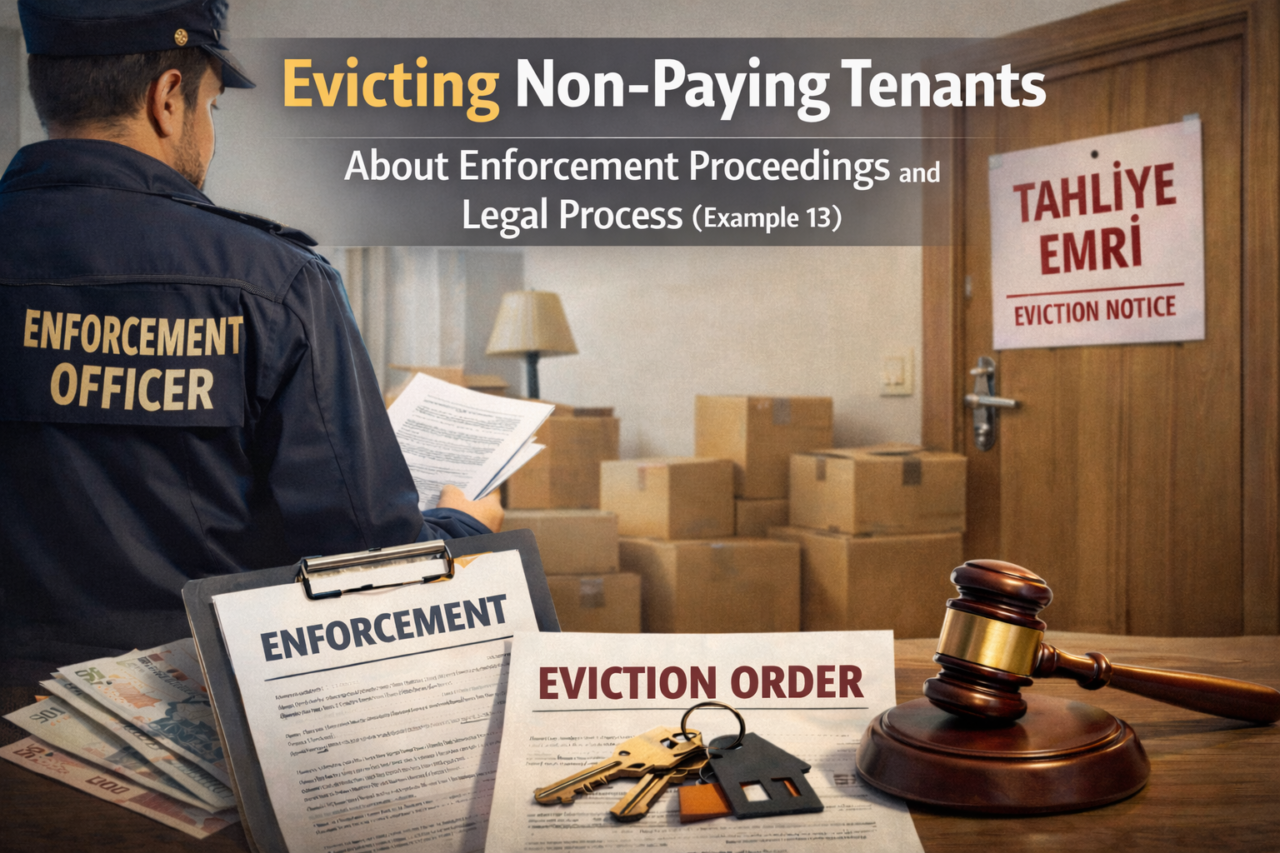
Example No: 13 Execution Proceeding and Eviction Lawsuit for a Non-Paying Tenant
One of the most frequent problems landlords (lessors) encounter in rental relationships is the tenant failing to pay the rent on time or at all. The Turkish Code of Obligations (TCO) and the Execution and Bankruptcy Law (EBL) stipulate rapid and effective methods to protect the property owner against a non-paying tenant. The most common and practical of these methods is the Example No: 13 Execution Proceeding with an Eviction Request and the Eviction Lawsuit process to be initiated if this proceeding yields no result. In this article, we will examine in full detail the legal steps that must be followed for the collection of the rental receivable and the eviction of the tenant.
What is the Example No: 13 Execution Proceeding?
Example No: 13, colloquially known as an “execution proceeding with an eviction request,” is a special method of execution proceeding without judgment, regulated in Article 269 and the following articles of the Execution and Bankruptcy Law, where attachment and eviction are requested simultaneously. With this type of proceeding, the property owner requests both the collection of unpaid rent via attachment and the eviction of the tenant from the immovable property if the payment is not made within the granted legal period. The biggest advantage of this method is that it allows for an eviction decision to be obtained much faster through the Enforcement Civil Courts, without waiting for lengthy general court processes.
Is it Mandatory to Send a Warning Letter Before Example 13?
One of the issues that landlords are most confused about is whether it is mandatory to send a warning letter through a notary public before initiating an execution proceeding. In the Example No: 13 execution proceeding, there is no obligation to send a prior warning letter; the payment order sent through the execution office legally substitutes for a warning letter. Therefore, initiating the process directly through the execution office without incurring notary expenses and losing time is the most practical method.
Execution Proceeding Process and Legal Periods (The 7 and 30-Day Rule)
As a result of the proceeding initiated through the execution office, a “Payment Order” is sent to the tenant. In this payment order sent for residential and roofed workplace rentals, two important legal periods are granted to the tenant:
- Objection Period (7 Days): Pursuant to Article 269 of the EBL, the tenant may object to the debt, the interest, or the lease agreement within 7 days from the notification of the payment order to them. If an objection is made, the execution proceeding is halted.
- Payment Period (30 Days): If the tenant does not object to the proceeding, or even if they do object (without prejudice to the lawsuit for the removal of the objection), they must pay the lease debt subject to the proceeding together with all its accessories (interest, expenses, etc.) within 30 days from the notification date, pursuant to Article 315 of the TCO by reference from Article 269 of the EBL.
The Tenant’s Possible Moves and the Nature of the Agreement
How the process will proceed depends on the tenant’s reaction to the payment order and the form of the lease agreement:
- If the tenant pays the debt within 30 days: An eviction lawsuit cannot be filed since default (delay) will not occur. However, this situation grants the landlord the right to use it as the first warning towards filing an “Eviction Lawsuit Due to Two Justified Warnings.”
- If the tenant objects within 7 days: The proceeding halts. At this point, whether the agreement is written or oral becomes important:
- If there is a Written Lease Agreement: If the tenant does not deny the signature, the property owner may file a fast-concluding “Removal of Objection and Eviction” lawsuit in the Enforcement Civil Court pursuant to Article 269/c of the EBL.
- If there is an Oral Agreement (Or the Signature is Denied): Because the Enforcement Civil Court has limited jurisdiction, it cannot hear witnesses. The landlord must file an “Annulment of Objection and Eviction” lawsuit in the Civil Court of Peace, which is a longer process.
- If the tenant does not object and does not pay within 30 days: The execution proceeding becomes final; the landlord gains the right to file an eviction lawsuit directly pursuant to the provision of Article 269/a of the EBL.
The Tenant’s “Partial Payment” Trap: Does Incomplete Payment Prevent Eviction?
One of the frequently encountered situations in practice is the tenant paying only the principal rent amount within the 30-day legal period and failing to pay the accrued interest, execution proceeding expenses, or the attorney’s fee. The Supreme Court decisions are extremely clear on this matter: It is mandatory for the tenant to pay all amounts specified in the execution request in full to avoid eviction. Even if the principal rent is paid within the 30-day period, paying the execution expenses or interest incomplete by even 1 TRY does not eliminate the fact of default and grants the landlord the right to file an eviction lawsuit in the Enforcement Civil Court.
The Eviction Lawsuit in the Enforcement Civil Court
If the tenant does not pay their debt in full despite the expiration of the 30-day payment period, the property owner may apply to the Enforcement Civil Court and request the tenant’s eviction.
- Time Limit for Filing a Lawsuit: Pursuant to Article 269/a of the EBL, the eviction lawsuit must be filed within 6 months starting from the end of the 30-day payment period. This period is a statute of limitations (forfeiture period).
- Mediation Exception: Although mediation has become mandatory in lease disputes as of September 1, 2023, the lawsuits for the removal of objection and eviction initiated via execution proceedings without judgment (Example 13) and filed in the Enforcement Civil Court are not subject to the mediation lawsuit condition. The property owner may file a lawsuit directly (Lawsuits in the Civil Court of Peace, however, are subject to mediation).
- Hearing and Decision: The court conducts a formal review; it decides on eviction by checking whether the payment order was notified in accordance with the procedure and whether the complete payment was made within the deadline.
How Long Does the Eviction Process Take on Average?
Although the length of the process varies depending on whether the tenant objects or not and the workload of the courts, an average timeline is as follows:
- Initiation of the execution proceeding and the notification process: 1-3 weeks
- Waiting for the legal payment period: 30 days
- Lawsuit process in the Enforcement Civil Court: 3-6 months
- Execution of the decision and actual eviction: 1-2 months
If no procedural errors are made, the eviction can be concluded within an average of 5-8 months.
The Execution of the Decision and the Actual Eviction Process
After the court issues an eviction decision, if the tenant does not vacate the immovable property immediately, the forced eviction stage begins. With the submission of the eviction decision to the execution office, an execution order is sent to the tenant. Upon the expiration of the legal period from the notification of the decision, the immovable property is physically vacated accompanied by execution officers (via a locksmith and law enforcement forces if necessary) and delivered to the property owner.
خاتمة
The Example 13 execution proceeding initiated under Article 269 of the EBL against a tenant who does not pay their rent is one of the most effective tools the law offers to property owners. However, this process is subject to strict formal conditions such as compliance with the notification law, strict monitoring of deadlines, and applying to the correct court with the correct demands. The slightest procedural error to be made can lead to time losses that will take months. Conducting the process through an expert attorney in the field from beginning to end will prevent the loss of rights.